

Cities: Land, Housing and Urban Planning
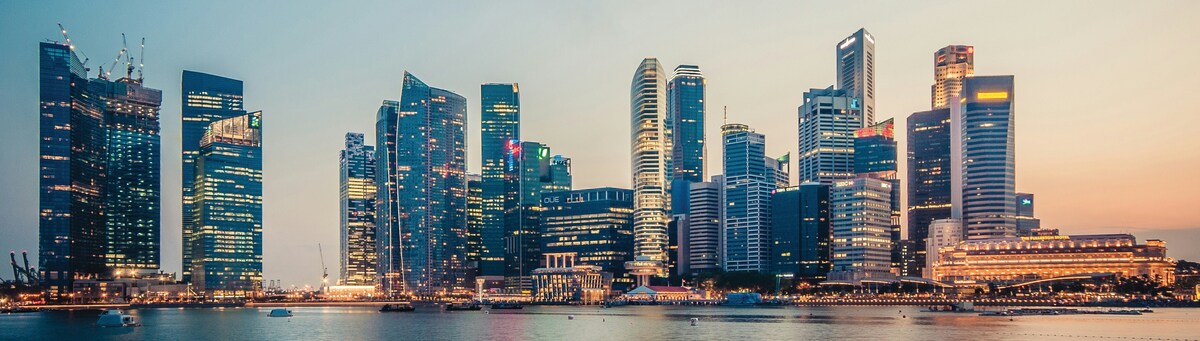
Today, more than half the world's population – numbering nearly 4.5 billion inhabitants – live in cities. With the uptrend anticipated to persist, nearly 7 of 10 people (or 70% of the global population) will eventually live in cities by 2050 .
As centres of commerce, cities account for more than 80% of the global GDP. However, rapid urbanisation raises a myriad of issues – all of which need careful attention. Affordable housing, employment, services and amenities, transportation and placemaking all work in tandem to make a city liveable for its inhabitants, while housing and urban planning policies and the ramifications they create also need to be examined.
The institute’s research in this area is therefore wide-ranging, covering infrastructure and its impact on the environment to mobility, mental health, gentrification, displacement and other social dynamics that unfold amid a high-density urban landscape.
Latest research findings
In their 2026 study “Housing Privatization as Intergenerational Redistribution”, Chen, Fang and Tang deep-dive into China’s housing reforms of the 1990s, investigating how the privatisation of what was previously state-owned rental housing enabled citizens to unlock and own home equity for the first time. This study provides a compelling framework for evaluating the long-term sustainability of real estate-driven welfare systems, and highlights potential learning points for policymakers here.
In their working paper “Housing Markets and the Belief in Opportunity”, Chua and Zhang pivot away from objective metrics to empirically measure how housing market dynamics shape the subjective beliefs of Singaporeans concerning intergenerational mobility and the long-term prospects of their children. Through a randomised informational experiment, their study offers insights into the psychology behind homeowners here, and how they respond to shifting affordability constraints, state interventions, and the perceived fairness of the broader economic landscape.
The unintended effects of green building certification based on a working paper by Agarwal, Araral, Fan, Qin and Zheng (2024) "From Efficiency to Excess: Understanding Utility Usage in Green-Certified Homes".
Through an in-depth analysis of data, Agarwal et al. uncovered unanticipated outcomes. In a nuanced interplay between sustainability and economics, a green premium on certified buildings had in fact churned out an unintended externality in the form of increased household consumption of utilities.
Public housing and intergenerational mobility based on Agarwal, Fan, Qian and Sing's 2023 study "Like Father Like Son? Social Engineering and Intergenerational Mobility in Housing Consumption".
Agarwalet al. furnish robust evidence that children from lower-income families whose parents benefitted from affordable public housing are likely to surpass their parents’ housing status.